UX/UI &
Product Design
Arvo
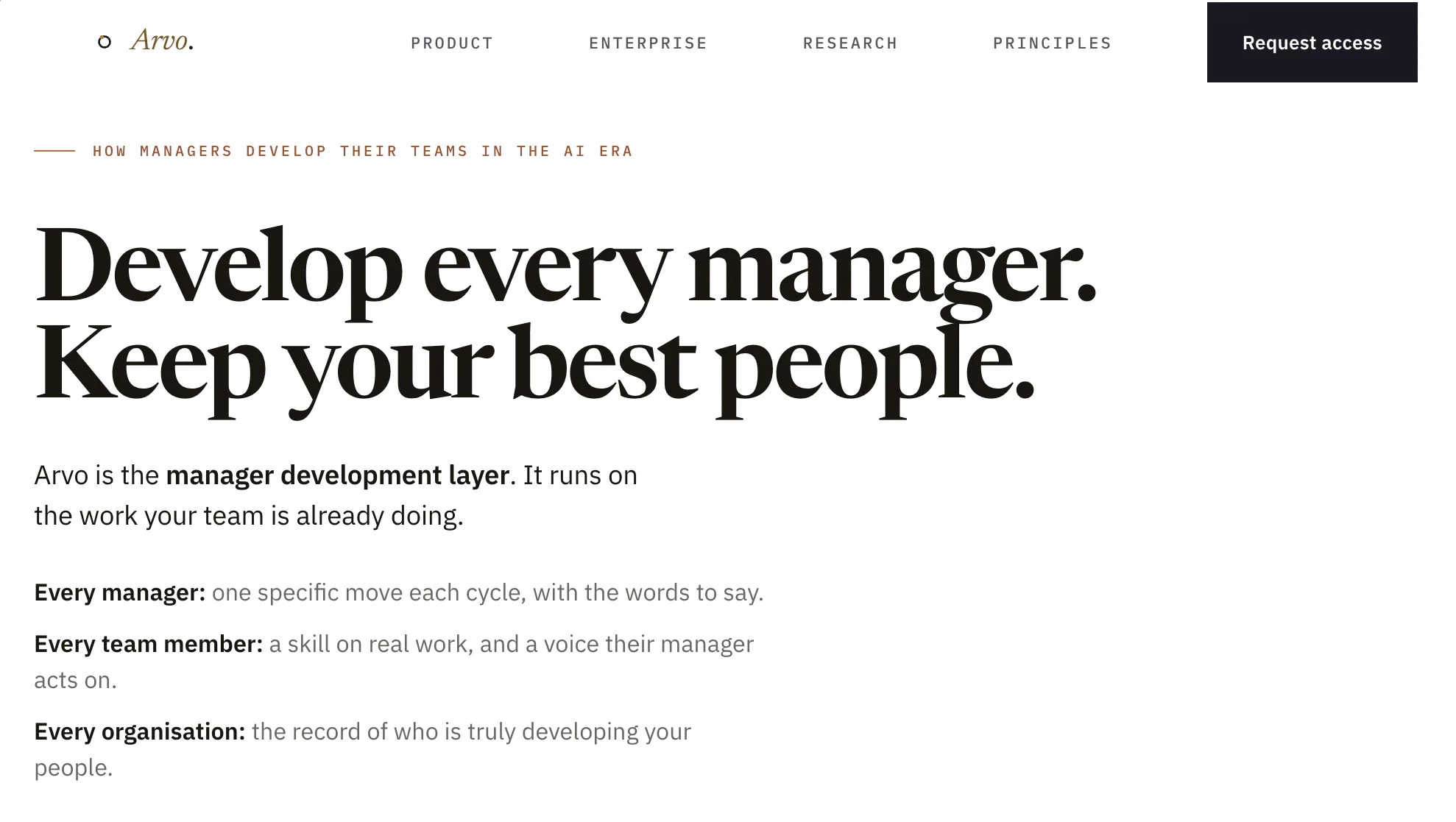
Arvo is a manager development platform from a Singapore startup, built to turn weekly team check-ins into something managers can act on.
We worked as the UX/UI design team within a larger project group, supporting the company's transition from a consumer product to one designed for businesses.
The product already existed. The open question was why managers were not returning to it, so the work started with research rather than screens.
Research came before any screen was drawn
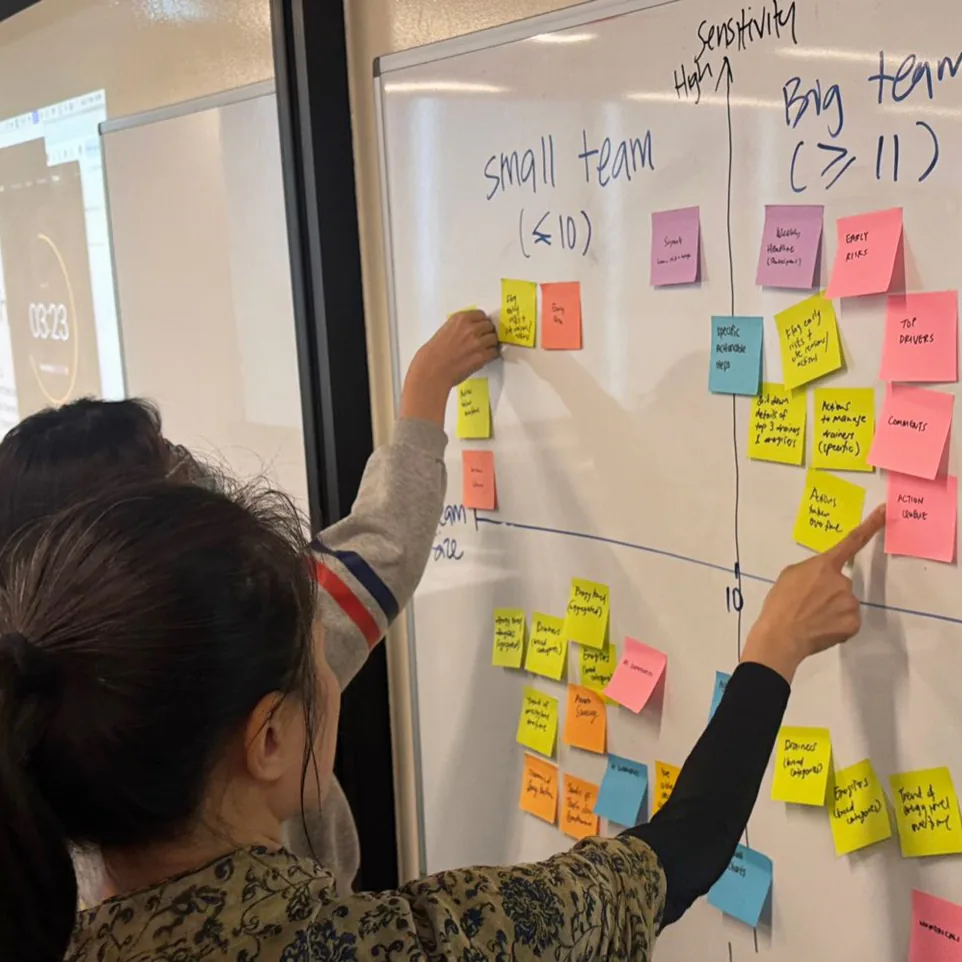
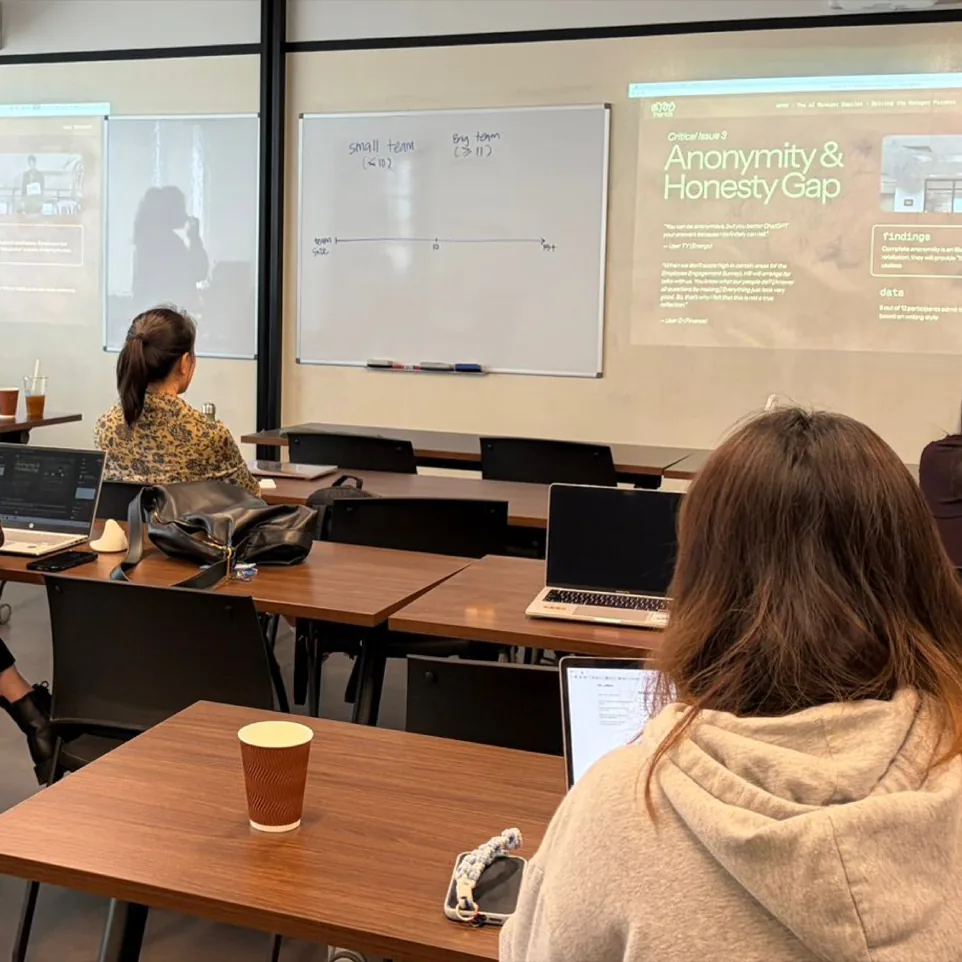
We spoke with 25 participants across eight industries through 12 manager interviews and 13 usability sessions, mapping where managers' attention went, what they needed from the product and where friction was getting in the way.
What we learned
What surfaced was a cognitive load problem rather than a data problem. Managers did not need more information. They needed help knowing what to do with it.
Every point of friction added to what a manager had to work out for themselves. If the tool took more effort to understand than the time it promised to save, there was little reason to return to it.
Design approach
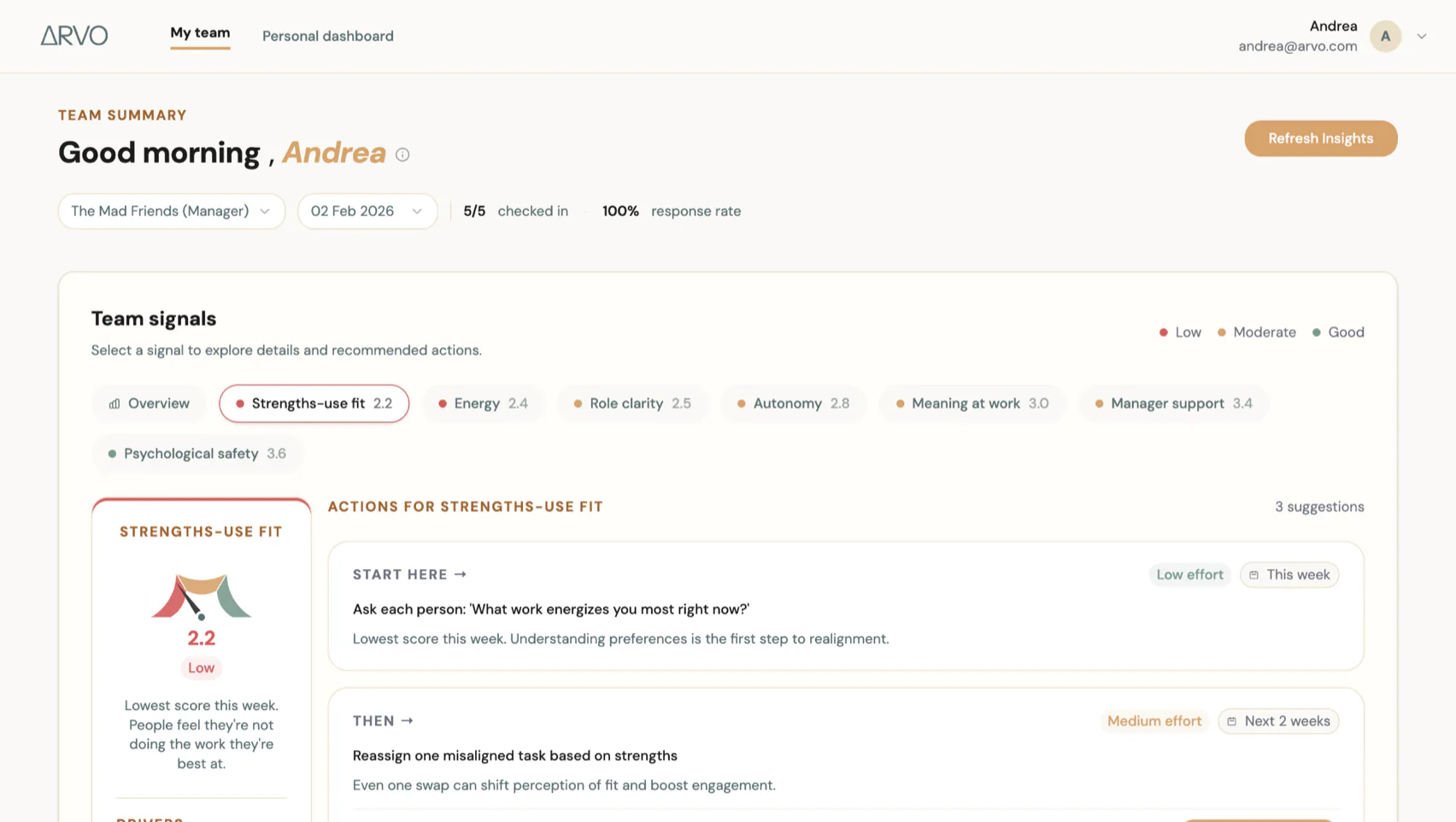
The redesign therefore leads with action, keeping the underlying signals and scores available as supporting context rather than making managers interpret them first.
Each insight is paired with something they can act on that week, giving managers a clear next step rather than another score to decipher.
Research also showed that managers placed greater trust in established frameworks than unexplained summaries, so recommendations reveal the reasoning behind them rather than asking users to accept an opaque conclusion.
My contribution
My contribution within the team spanned research synthesis, interaction and interface design, prototyping and the design system, alongside collaborative product thinking. I also helped prepare the documented Figma handover for Arvo's developers.
A next step, not another dashboard
Employees, managers and HR each see the signals relevant to their role, paired with a clear next step.
Responses remain aggregated, giving managers useful context while protecting individual anonymity.